
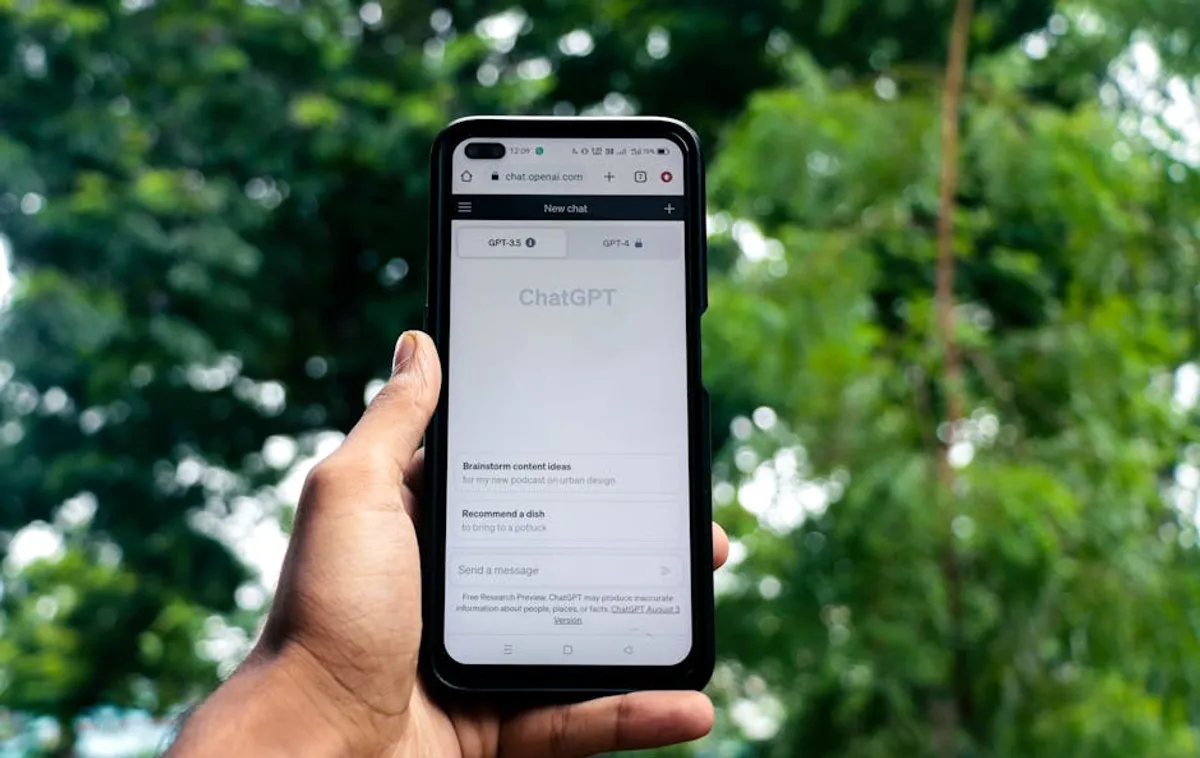
Selecting a private AI chat app requires a clear understanding of your data security priorities and conversational needs. Unlike general-purpose AI assistants, private AI chat applications are specifically engineered with enhanced privacy protocols, often incorporating end-to-end encryption, strict data retention policies, and localized processing capabilities. This focus is critical for individuals and businesses handling sensitive information, intellectual property, or confidential client communications, where the standard data practices of public AI models may pose unacceptable risks. The market offers a range of solutions, each with distinct features designed to address varying levels of privacy concerns, integration requirements, and user experience preferences. Evaluating these options means looking beyond basic functionality to scrutinize their underlying security architectures and commitment to user data autonomy.
Key Considerations for Selecting a Private AI Chat App
Before committing to an AI chat solution, assess its fundamental privacy mechanisms and how they align with your operational or personal requirements. A critical first step involves examining the app's data handling policies: does it log conversations, and if so, for how long and under what conditions? Look for explicit statements on data anonymization and whether data is used for model training without explicit, granular consent. Encryption standards are paramount; end-to-end encryption ensures that only the sender and intended recipient (in this case, you and the AI model) can read messages, preventing eavesdropping by the service provider or third parties. Consider where the data is processed and stored—on-device processing offers the highest degree of privacy, while server-side processing requires trust in the provider's infrastructure and geographical data residency laws. Finally, evaluate the app's transparency regarding its AI model architecture and any third-party integrations, as these can introduce additional data exposure points. A thorough review of these elements will help distinguish genuinely private solutions from those offering only superficial privacy claims.
1. CipherChat AI
CipherChat AI is engineered for maximum confidentiality, utilizing a proprietary blend of homomorphic encryption and federated learning. This architecture allows the AI to process queries without decrypting the data, maintaining an encrypted state throughout the interaction. Its core design principle is "privacy by default," meaning no user data is logged or stored on central servers, and all model training occurs on anonymized, aggregated datasets. The interface is deliberately minimalist, prioritizing secure interaction over advanced multimedia features, making it suitable for text-based sensitive discussions where data leakage is unacceptable. It operates with a strong emphasis on user control over data, offering clear options for conversation deletion and session management.
Best For: Legal professionals, financial consultants, or individuals requiring absolute assurance that their chat content remains unreadable by any third party, including the service provider.
Pros:
- Industry-leading homomorphic encryption for processing data in an encrypted state.
- Zero-knowledge architecture ensures no conversation logs are maintained.
- Transparent data handling policies with explicit user control over data deletion.
- Supports on-device processing for enhanced local privacy.
Cons:
- Limited integration with external tools or public knowledge bases due to security constraints.
- AI model may exhibit slightly slower response times compared to less secure, cloud-intensive alternatives.
- User interface is functional but lacks advanced customization options.
Verdict: CipherChat AI sets a high bar for data privacy in AI chat, making it an indispensable tool for users whose primary concern is the uncompromised security of their conversational data, even at the expense of broader feature sets or instant responsiveness.
2. GuardianMind
GuardianMind offers a robust private AI chat experience by combining end-to-end encryption with a strict no-logging policy. It distinguishes itself by providing granular control over data residency, allowing users in certain regions to select server locations that comply with specific local data protection regulations. The platform leverages a fine-tuned, open-source large language model (LLM) that can be deployed on a user's private cloud or even locally, significantly reducing reliance on third-party infrastructure. Its design focuses on secure enterprise deployment, offering administrative controls for data access and compliance auditing, making it a strong contender for organizations with stringent security requirements.
Best For: Enterprises and organizations with strict regulatory compliance needs (e.g., GDPR, HIPAA) or those requiring localized data processing and auditing capabilities.
Pros:
- Configurable data residency options to meet specific regulatory requirements.
- Ability to deploy the AI model on private cloud infrastructure or on-premise.
- Comprehensive administrative controls for enterprise-level data governance.
- Transparent use of open-source LLMs, allowing for community scrutiny and customization.
Cons:
- Initial setup and deployment can be more complex for individual users or small businesses.
- Requires a deeper understanding of IT infrastructure for optimal private cloud integration.
- The open-source model may require more frequent updates and maintenance by the user.
Verdict: GuardianMind is a powerful solution for organizations prioritizing sovereign data control and regulatory compliance, offering significant flexibility in deployment and management, provided the user has the technical resources to leverage its capabilities effectively.
3. StealthGPT
StealthGPT emphasizes anonymized interactions and ephemeral conversations. Its core mechanism involves routing queries through a decentralized network, masking the user's IP address and other identifying metadata before reaching the AI model. Conversations are designed to be non-persistent by default, automatically deleting after a set period or upon session termination, with no option for server-side storage. This app is built for users who need to conduct sensitive, one-off inquiries without leaving a digital trace. While it offers a competent conversational AI, its primary value proposition lies in its ability to facilitate discussions that are virtually untraceable back to the user.
Best For: Journalists, researchers, or individuals needing to discuss sensitive topics anonymously without any record of the interaction being retained.
Pros:
- Decentralized routing enhances user anonymity and privacy.
- Ephemeral conversations automatically delete, ensuring no persistent records.
- No user accounts or personal identifiers are required for basic use.
- Focuses on untraceable interactions, minimizing digital footprint.
Cons:
- Lack of conversation history can hinder continuity for ongoing projects.
- Integration with other tools is minimal due to its focus on isolation.
- Performance can occasionally be affected by network latency from decentralized routing.
Verdict: StealthGPT is an excellent choice for users prioritizing anonymity and non-persistence, offering a secure channel for sensitive, short-term inquiries where the absence of a digital footprint is more important than conversation recall or deep integration.
4. PrivateLogic AI
PrivateLogic AI provides a balanced approach to privacy and utility, offering robust encryption for data in transit and at rest, coupled with a transparent data usage policy. It allows users to opt-in or opt-out of data collection for model improvement, giving them direct control over how their interactions contribute to the AI's development. The platform features a secure sandbox environment where users can test prompts and receive responses without their data ever leaving a contained system. It aims to bridge the gap between highly secure but feature-limited apps and more functional but less private alternatives, making it suitable for a broader range of professional uses.
Best For: Professionals who need a secure AI assistant for daily tasks but also want explicit control over their data's contribution to AI model training and development.
Pros:
- Granular opt-in/opt-out controls for data collection and model training.
- Secure sandbox environment for testing prompts without data exposure.
- Strong encryption for data both in transit and at rest.
- Offers a good balance between privacy features and conversational utility.
Cons:
- Not fully zero-knowledge; requires trust in the provider's stated data policies.
- Advanced privacy features may require higher subscription tiers.
- Integration capabilities are present but not as extensive as less privacy-focused tools.
Verdict: PrivateLogic AI offers a compelling proposition for users seeking a secure AI chat experience with configurable privacy settings, making it a versatile option for professionals who value both security and practical functionality.
5. DataVault AI
DataVault AI is designed with an emphasis on personal data sovereignty, allowing users to encrypt and store their chat histories on their own devices or designated private cloud storage. The AI model itself is accessed through secure APIs, but the conversational context and user-specific data are managed client-side, giving users complete ownership and control over their historical interactions. It supports integration with personal data lockers and secure file storage solutions, making it ideal for those who want to leverage AI without relinquishing control over their data footprint. The focus here is on empowering the user to manage their data lifecycle.
Best For: Individuals or small businesses who want full control and ownership over their chat data, preferring client-side storage and management rather than relying on service provider servers.
Pros:
- Client-side encryption and storage of chat history, ensuring personal data sovereignty.
- Integrates with popular secure personal cloud storage solutions.
- Users have direct control over data retention and deletion.
- AI model access is isolated from personal data storage.
Cons:
- Requires users to manage their own data backups and storage.
- Setup can be more involved for users unfamiliar with client-side data management.
- AI model capabilities are dependent on the API access, not fully on-device.
Verdict: DataVault AI is an excellent choice for privacy-conscious users who are comfortable managing their own data and prioritize absolute control over their conversational history, offering a robust framework for personal data sovereignty.
6. AnonymAI Chat
AnonymAI Chat prioritizes identity protection by stripping all personally identifiable information (PII) from user inputs before they are processed by the AI model. It employs advanced anonymization techniques, including differential privacy and k-anonymity, to ensure that even if data were to be compromised, it could not be linked back to an individual. The app offers a simple, intuitive interface, making it accessible for general users who are concerned about their identity being associated with their AI interactions. While it focuses on anonymization rather than strict end-to-end encryption of the entire conversation, it ensures that the AI only "sees" anonymized data points.
Best For: General users who want to engage with AI without their identity being linked to their queries, particularly for sensitive personal questions or exploratory research.
Pros:
- Advanced anonymization techniques effectively strip PII from queries.
- Simple and user-friendly interface, accessible to a broad audience.
- Focuses on protecting user identity rather than just data content.
- Suitable for general-purpose sensitive inquiries without direct identity exposure.
Cons:
- Does not offer full end-to-end encryption of the raw conversation content.
- Anonymization process might occasionally alter nuances in complex queries.
- Relies on the provider's anonymization algorithms, requiring a degree of trust.
Verdict: AnonymAI Chat serves as a valuable tool for users primarily concerned with protecting their identity during AI interactions, offering a straightforward solution for anonymized querying without the complexity of deep encryption protocols.
7. TrustyTalk AI
TrustyTalk AI is built on a verifiable privacy framework, providing users with cryptographic proofs that their data has been handled according to stated policies. It leverages blockchain technology to create an immutable ledger of data access and processing, ensuring transparency and accountability. While the AI model itself runs on secure servers, every interaction's metadata (not content) is hashed and recorded on a private blockchain, allowing users to audit the system's compliance. This unique approach caters to users and organizations that require auditable proof of privacy adherence, moving beyond mere policy statements to verifiable claims.
Best For: Organizations and individuals requiring auditable proof of data handling and privacy compliance, such as those in highly regulated industries or public sector roles.
Pros:
- Blockchain-based verifiable privacy framework for auditable compliance.
- Cryptographic proofs of data handling adherence.
- Enhanced transparency regarding data access and processing.
- Strong focus on accountability for data practices.
Cons:
- Blockchain integration can introduce complexity and potential latency.
- The actual content of conversations is not stored on the blockchain, only metadata hashes.
- Requires a basic understanding of blockchain concepts for full utilization of audit features.
Verdict: TrustyTalk AI offers a groundbreaking approach to privacy through verifiable compliance, making it an excellent choice for users who demand not just privacy, but also transparent, auditable proof of how their data is managed.
8. SecureFlow AI
SecureFlow AI specializes in secure, real-time collaboration with AI, offering encrypted channels for group discussions where the AI acts as a participant or moderator. It integrates robust access controls and permission settings, allowing administrators to define who can interact with the AI and what data can be shared. The platform supports secure file uploads and contextual memory within encrypted sessions, making it suitable for teams working on confidential projects. Its design prioritizes secure, dynamic interaction within a controlled environment, ensuring that collaborative AI use doesn't compromise data integrity or confidentiality.
Best For: Teams and organizations requiring a secure AI assistant for collaborative projects, brainstorming, or knowledge management within a highly controlled and encrypted environment.
Pros:
- Encrypted channels for real-time, multi-user AI collaboration.
- Granular access controls and permission settings for team management.
- Supports secure file uploads and contextual memory within sessions.
- Designed for enterprise-level secure group interaction with AI.
Cons:
- Individual user experience might be less streamlined than single-user apps.
- Requires administrative oversight for optimal security configuration.
- Subscription costs can be higher due to collaborative infrastructure.
Verdict: SecureFlow AI is an ideal solution for teams seeking to integrate AI into their collaborative workflows without sacrificing security, providing a robust, controlled, and encrypted environment for confidential group interactions.
9. PrivateMind Pro
PrivateMind Pro offers a premium private AI chat experience with a focus on advanced natural language processing (NLP) capabilities within a secure framework. It utilizes a combination of on-device inference for common tasks and encrypted, tokenized cloud processing for more complex queries, ensuring that sensitive information remains local whenever possible. The app provides extensive customization options for the AI's persona and knowledge base, allowing users to create a highly personalized and secure AI assistant. Its emphasis is on delivering high-performance AI while maintaining a strong commitment to user privacy through hybrid processing models.
Best For: Power users and professionals who require both advanced AI capabilities (e.g., complex summarization, nuanced content generation) and a high degree of privacy control.
Pros:
- Hybrid processing model prioritizes on-device inference for privacy.
- Advanced NLP capabilities for sophisticated conversational tasks.
- Extensive customization options for AI persona and knowledge base.
- Premium support and dedicated privacy features.
Cons:
- Higher subscription cost reflects premium features and privacy infrastructure.
- Some advanced features may still rely on encrypted cloud processing.
- Requires a more powerful device for optimal on-device performance.
Verdict: PrivateMind Pro is a top-tier choice for users who demand both cutting-edge AI performance and robust privacy, offering a sophisticated and customizable assistant that intelligently manages data processing locations.
10. EncryptGPT
EncryptGPT is a minimalist, open-source private AI chat app designed for tech-savvy users who prioritize transparency and community-audited security. It uses standard AES-256 encryption for all data and offers a fully auditable codebase, allowing independent security researchers to verify its privacy claims. Users can self-host the AI model and the chat interface, providing the ultimate control over their data and infrastructure. While it might require some technical proficiency to set up, its open-source nature ensures that there are no hidden backdoors or proprietary data handling practices, fostering complete trust through transparency.
Best For: Developers, security researchers, or organizations that prefer open-source solutions for complete transparency and the ability to self-host and audit their AI chat infrastructure.
Pros:
- Fully open-source codebase for community auditing and transparency.
- Supports self-hosting for maximum data control and infrastructure independence.
- Utilizes robust, industry-standard AES-256 encryption.
- Eliminates reliance on third-party privacy claims through verifiable code.
Cons:
- Requires significant technical expertise for setup, maintenance, and self-hosting.
- Lacks the polished user interface and advanced features of commercial apps.
- Community support may vary, requiring self-reliance for troubleshooting.
Verdict: EncryptGPT is the definitive choice for users who value absolute transparency and control, offering a secure, auditable, and self-hostable AI chat solution, provided they possess the necessary technical skills.
11. QuantumSecure AI
QuantumSecure AI is at the forefront of post-quantum cryptography integration for AI chat. It employs cryptographic algorithms designed to resist attacks from future quantum computers, ensuring long-term data security against evolving threats. The app provides end-to-end encryption using these advanced protocols, making it suitable for extremely long-term sensitive data protection. While the AI model's capabilities are standard, its unique selling proposition is its forward-looking security posture, offering peace of mind for information that needs to remain confidential for decades. It's an investment in future-proofing your private conversations.
Best For: Government agencies, defense contractors, or researchers dealing with highly classified information that requires protection against future cryptographic breakthroughs.
Pros:
- Integrates post-quantum cryptography for future-proof data security.
- Offers long-term protection against advanced cryptographic attacks.
- Provides peace of mind for extremely sensitive, long-lived data.
- Demonstrates a commitment to cutting-edge security research.
Cons:
- Post-quantum algorithms can be computationally intensive, potentially affecting performance.
- The technology is still nascent, and widespread adoption is ongoing.
- AI model capabilities are not the primary focus, rather security algorithms.
Verdict: QuantumSecure AI is a niche but critical offering for those with an imperative to protect data against future quantum threats, providing a robust, forward-looking security layer for the most sensitive information.
12. EchoGuard AI
EchoGuard AI focuses on voice-based private AI interactions, ensuring that spoken queries and responses are encrypted from the microphone to the AI model and back. It uses secure voice-to-text and text-to-speech processing that occurs either on-device or within a highly isolated, encrypted cloud environment. The app is particularly useful for hands-free operations where privacy is still a concern, such as in vehicles or secure meeting rooms. It minimizes the risk of voice data interception and ensures that conversational nuances are not exposed, offering an auditory layer of privacy often overlooked in text-based solutions.
Best For: Users who primarily interact with AI via voice and require secure, encrypted voice conversations, such as mobile professionals or those with accessibility needs.
Pros:
- End-to-end encryption for voice interactions, from input to output.
- Secure on-device or isolated cloud voice processing.
- Enables hands-free secure AI interaction.
- Addresses privacy concerns specific to voice data.
Cons:
- Voice recognition accuracy can be influenced by environmental factors.
- Requires reliable internet connection for cloud-based voice processing.
- Limited to voice input, potentially less flexible for complex text-based queries.
Verdict: EchoGuard AI is an innovative solution for secure voice-based AI interaction, providing essential privacy for spoken queries where traditional text-based apps fall short, making it ideal for specific use cases requiring hands-free operation and