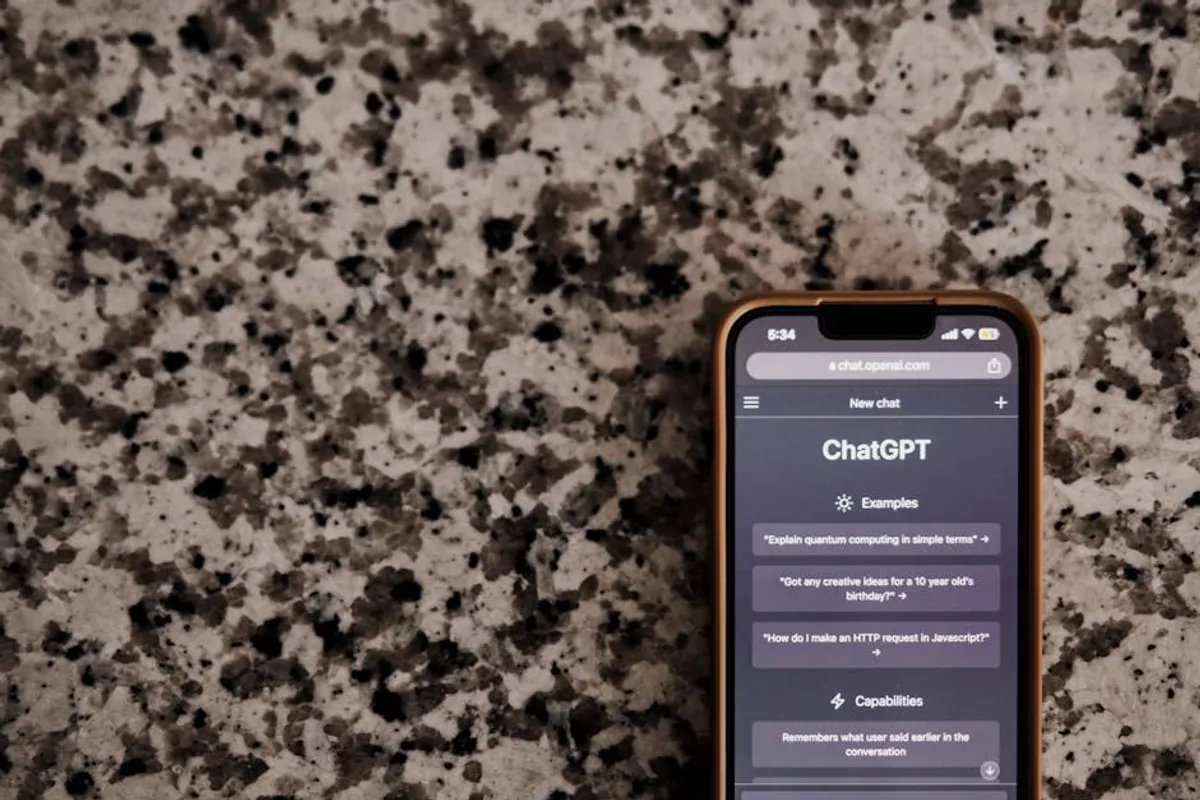
The development of AI chatbots has moved beyond simple customer service automation, opening new avenues for both engaging entertainment and tangible productivity gains. For businesses, marketers, and content creators, identifying and developing the right AI chatbot concept can unlock significant user engagement, streamline operations, or create entirely new product offerings. The decision isn't merely about adopting AI, but about strategically applying conversational interfaces to solve specific user needs or create novel interactive experiences.
This exploration focuses on distinct AI chatbot ideas, dissecting their commercial viability, operational requirements, and potential impact. Each concept is evaluated for its core utility, detailing who benefits most, alongside practical advantages and inherent challenges. The goal is to provide a framework for understanding where specific AI chatbot applications can deliver measurable value, whether through enhancing user interaction, automating complex tasks, or generating unique content.
Key Considerations for AI Chatbot Development
Before committing resources to an AI chatbot project, evaluate several critical factors. First, define the primary objective: is it to entertain, to improve efficiency, or both? This dictates the complexity of natural language understanding (NLU) and generation (NLG) required. Second, consider the data sources; entertainment bots might rely on creative algorithms, while productivity bots often need access to structured information or user-specific data. Third, assess the integration requirements. Will the chatbot operate independently, or does it need to interface with existing platforms like CRM systems, content management tools, or external APIs? Finally, plan for scalability and maintenance. As user bases grow or information needs evolve, the chatbot must adapt without requiring constant, costly overhauls. A clear understanding of these points will guide the selection of an appropriate AI chatbot idea and inform its successful implementation.
1. Personalized Storyteller AI
This chatbot concept focuses on generating unique, narrative-driven content tailored to individual user preferences. Users provide initial prompts—such as genre, characters, settings, or plot points—and the AI constructs an original story in real-time. The interaction can be dynamic, allowing users to influence the narrative direction, make choices for characters, or request specific twists. This moves beyond static content consumption, offering an interactive and co-creative entertainment experience that adapts to user input, fostering deeper engagement.
Best for: Media companies, educational platforms, creative writing communities, or brands seeking novel interactive marketing content.
Pros:
- High user engagement potential through co-creation.
- Generates unique, copyright-free content on demand.
- Scalable content production without human authoring costs.
- Adaptable for various age groups and reading levels.
Cons:
- Requires sophisticated NLG to maintain narrative coherence and quality.
- Risk of repetitive plot structures or generic prose without advanced training.
- Content moderation might be necessary to prevent generation of inappropriate material.
- User expectations for literary quality can be high, challenging AI capabilities.
Verdict: Offers a compelling entertainment proposition with significant potential for content diversification, provided the underlying AI can consistently produce engaging and logically sound narratives. Its commercial value lies in subscription models or premium content generation.
2. Gamified Learning Companion AI
This idea integrates educational content with game-like mechanics, delivered through a conversational interface. The AI acts as a tutor, quiz master, and motivator, guiding users through learning modules with challenges, rewards, and progress tracking. It can adapt the difficulty and pace of lessons based on user performance, providing immediate feedback and personalized explanations. The gamification aspect, such as points, badges, or leaderboards, encourages sustained engagement and makes complex subjects more approachable.
Best for: E-learning platforms, corporate training departments, language learning apps, or educational content publishers.
Pros:
- Increases user motivation and retention through interactive challenges.
- Provides personalized learning paths and adaptive difficulty.
- Automates tutoring and feedback, reducing human instructor load.
- Can be deployed across various subjects, from technical skills to soft skills.
Cons:
- Requires extensive content integration and pedagogical design.
- Maintaining a balance between challenge and frustration is critical for user experience.
- Development costs for robust NLU and adaptive learning algorithms can be substantial.
- Not all learning styles benefit equally from gamified conversational approaches.
Verdict: A high-impact productivity tool for education, capable of transforming passive learning into an active, engaging experience. Success hinges on strong instructional design and an AI that genuinely understands and responds to learning nuances.
3. Creative Brainstorming Assistant AI
Designed to combat creative blocks and stimulate innovative thinking, this chatbot acts as a digital muse. Users can input a problem, a topic, or a creative brief, and the AI generates a diverse range of ideas, concepts, or prompts. It can employ various brainstorming techniques, such as SCAMPER (Substitute, Combine, Adapt, Modify, Put to another use, Eliminate, Reverse) or random word association, to provide unexpected perspectives. The interaction is iterative, allowing users to refine prompts and explore different conceptual avenues.
Best for: Marketing agencies, product development teams, content creators, writers, designers, or anyone seeking to generate novel ideas efficiently.
Pros:
- Accelerates idea generation and overcomes creative inertia.
- Provides diverse perspectives that might be overlooked by human teams.
- Available 24/7, offering on-demand creative support.
- Reduces reliance on expensive human brainstorming facilitators.
Cons:
- Generated ideas may sometimes be impractical, generic, or off-topic.
- Requires a sophisticated understanding of context to deliver truly relevant suggestions.
- Users might become overly reliant, potentially diminishing their own creative muscles.
- Integration with existing project management or design tools can be complex.
Verdict: A valuable productivity enhancer for creative professionals, offering a scalable solution for idea generation. Its effectiveness is directly tied to the AI's ability to interpret nuanced inputs and produce genuinely original, actionable concepts.
4. Role-Playing Character AI
This chatbot allows users to engage in conversational role-play with AI-driven characters, ranging from historical figures to fictional personas. The AI maintains character consistency in terms of personality, knowledge base, and conversational style, creating an immersive experience. Users can explore narratives, practice social interactions, or simply enjoy a unique form of interactive storytelling. The complexity can vary from simple dialogue trees to advanced NLU that allows for open-ended conversations within the character's defined parameters.
Best for: Entertainment platforms, interactive fiction developers, language learning (for conversational practice), or social simulation games.
Pros:
- Provides a highly engaging and immersive entertainment experience.
- Offers a safe space for social interaction practice or exploring narratives.
- Can be used for educational purposes, such as historical simulations.
- Scalable creation of diverse characters without human actor costs.
Cons:
- Maintaining consistent character voice and knowledge requires advanced AI.
- Risk of AI breaking character or generating nonsensical responses.
- Ethical considerations around AI-generated personas and user attachment.
- Development of rich character backstories and dialogue trees is resource-intensive.
Verdict: A strong entertainment offering that taps into human desire for interaction and storytelling. Its success depends on the AI's ability to sustain believable and engaging character portrayals over extended interactions.
5. Hyper-Personalized News Curator AI
This chatbot acts as a personal news editor, delivering highly customized news summaries, articles, and updates based on a user's stated interests, past reading habits, and even their current mood or schedule. Unlike traditional news aggregators, it engages in conversational dialogue to refine preferences, explain complex topics, or provide different perspectives on a story. It can summarize long articles, highlight key takeaways, or even translate content into simpler language, significantly improving information consumption efficiency.
Best for: News organizations, content publishers, busy professionals, or individuals seeking to cut through information overload.
Pros:
- Reduces information fatigue by filtering irrelevant content.
- Delivers highly relevant news, increasing engagement with content.
- Offers conversational explanations and context, enhancing understanding.
- Can integrate with calendars to provide timely updates relevant to upcoming events.
Cons:
- Requires robust integration with multiple news sources and content APIs.
- Risk of creating filter bubbles, limiting exposure to diverse viewpoints.
- Sophisticated NLU needed to accurately gauge user intent and content relevance.
- Data privacy concerns when tracking reading habits and personal interests.
Verdict: A powerful productivity tool for information consumption, transforming how users interact with news. Its commercial viability lies in premium subscriptions for deep personalization and access to exclusive content sources.
6. Language Practice Partner AI
This chatbot provides an interactive environment for users to practice new languages. It simulates natural conversations, offers vocabulary suggestions, corrects grammar in real-time, and explains linguistic nuances. Users can engage in free-form dialogue, follow structured lessons, or practice specific scenarios like ordering food or asking for directions. The AI's ability to understand and respond in multiple languages makes it a versatile tool for learners at various proficiency levels.
Best for: Language learning platforms, educational institutions, or individuals seeking flexible and accessible language practice.
Pros:
- Offers unlimited, non-judgmental practice opportunities.
- Provides immediate feedback on grammar, pronunciation (if voice-enabled), and vocabulary.
- Adaptable to different proficiency levels and learning goals.
- Significantly more affordable and accessible than human tutors.
Cons:
- May lack the nuanced cultural understanding of a human speaker.
- Advanced conversational fluency can still be challenging for AI to replicate perfectly.
- Requires a large corpus of linguistic data for each supported language.
- User motivation can wane without the social accountability of human interaction.
Verdict: An effective productivity tool for language acquisition, offering a scalable and personalized practice environment. Its commercial success depends on its ability to provide sufficiently natural and corrective conversational experiences.
7. Interactive Fitness & Wellness Coach AI
This chatbot offers personalized guidance for physical fitness, nutrition, and mental well-being. Users can input their goals, dietary preferences, activity levels, and health conditions, and the AI generates customized workout plans, meal suggestions, or mindfulness exercises. It can track progress, provide motivational messages, answer health-related questions, and even connect with wearable devices for real-time feedback. The conversational interface makes health management more accessible and engaging than static apps.
Best for: Health and fitness companies, corporate wellness programs, personal trainers, or individuals seeking accessible health guidance.
Pros:
- Provides personalized health plans at a fraction of the cost of human coaches.
- Available 24/7 for support and motivation.
- Can integrate with health tracking devices for data-driven recommendations.
- Promotes consistent adherence through interactive goal setting and progress tracking.
Cons:
- Cannot replace professional medical advice or diagnose conditions.
- Requires careful data handling due to sensitive personal health information.
- Accuracy of dietary or exercise recommendations depends on data quality and AI training.
- Maintaining user motivation over long periods without human empathy can be difficult.
Verdict: A valuable productivity tool for personal health management, offering scalable and personalized coaching. Its commercial success relies on its ability to deliver accurate, safe, and motivating guidance within clear ethical boundaries.
8. Digital Art & Design Prompt Generator AI
This chatbot specializes in assisting artists, designers, and content creators by generating creative prompts for visual projects. Users can specify themes, styles, mediums, or desired emotions, and the AI provides unique ideas for illustrations, graphic designs, photography concepts, or even architectural sketches. It can offer variations, expand on initial concepts, or suggest color palettes and compositional elements. This helps overcome creative blocks and expands the artistic possibilities for users working with digital art tools.
Best for: Digital artists, graphic designers, photographers, content creators, or creative agencies.
Pros:
- Stimulates creativity and helps overcome artistic roadblocks.
- Generates a wide array of unique and unexpected visual concepts.
- Reduces time spent brainstorming initial ideas.
- Can be integrated with AI image generation tools for a full creative workflow.
Cons:
- Generated prompts may sometimes be too abstract or lack practical application.
- Requires a deep understanding of artistic terminology and concepts for effective output.
- The quality of suggestions depends heavily on the AI's training data.
- Risk of users becoming overly reliant on AI for initial creative input.
Verdict: An effective productivity tool for visual creators, offering on-demand inspiration and idea generation. Its commercial value is in enhancing creative workflows and reducing concept development time for professionals.
9. Event Planning & Social Concierge AI
This chatbot streamlines the process of organizing social gatherings and events. Users can interact with it to plan parties, meetings, or outings by specifying details like date, time, guest count, budget, and preferences for venue, cuisine, or activities. The AI can suggest locations, manage RSVPs, send invitations, create itineraries, and even handle basic vendor coordination. It acts as a personal assistant, automating many of the repetitive tasks involved in event management, freeing up user time.
Best for: Individuals, small businesses, event planners, or hospitality services seeking to automate event logistics.
Pros:
- Automates time-consuming administrative tasks for event planning.
- Provides personalized recommendations for venues, catering, and entertainment.
- Streamlines communication with guests and vendors.
- Reduces stress and potential errors associated with manual planning.
Cons:
- Requires extensive API integrations with booking platforms, calendars, and communication tools.
- Handling complex or highly customized requests can challenge AI capabilities.
- Data security and privacy are critical when managing guest lists and personal details.
- Unexpected issues or last-minute changes may still require human intervention.
Verdict: A practical productivity tool for simplifying event coordination, offering significant time savings. Its commercial potential lies in subscription models or commission-based partnerships with event service providers.
10. Historical Figure Conversationalist AI
This chatbot allows users to engage in simulated conversations with AI personas representing historical figures. The AI is trained on extensive biographical data, writings, and historical context to accurately reflect the figure's knowledge, beliefs, and speaking style. This offers an entertaining and educational experience, allowing users to "interview" historical personalities, gain insights into their era, or explore their philosophies in an interactive format. It serves as an engaging alternative to traditional history texts.
Best for: Educational institutions, museums, history enthusiasts, or interactive entertainment developers.
Pros:
- Provides an immersive and engaging way to learn history and philosophy.
- Offers unique perspectives on historical events and ideas.
- Scalable access to "conversations" with numerous historical figures.
- Can be used to generate educational content or interactive exhibits.
Cons:
- Requires vast amounts of historical data and careful AI training to ensure accuracy.
- Risk of AI misinterpreting historical context or generating anachronistic responses.
- Ethical considerations around representing historical figures and potential for misinformation.
- Maintaining a consistent and believable persona can be challenging for complex figures.
Verdict: A compelling entertainment and educational concept, offering a novel way to interact with history. Its success hinges on the AI's ability to maintain historical fidelity and deliver genuinely insightful, character-consistent interactions.
11. Code Debugging & Explainer AI
Targeted at developers and programmers, this chatbot acts as an intelligent assistant for coding tasks. Users can paste code snippets and ask the AI to identify bugs, suggest optimizations, explain complex functions, or even generate basic code in specified languages. It can provide context-aware explanations, point to relevant documentation, and offer refactoring advice. This significantly improves developer productivity by reducing time spent on debugging and understanding unfamiliar codebases.
Best for: Software development teams, coding bootcamps, individual developers, or technical support for programming tools.
Pros:
- Accelerates debugging and code comprehension processes.
- Provides instant, context-specific explanations and suggestions.
- Reduces reliance on human code reviewers for initial checks.
- Supports multiple programming languages and frameworks.
Cons:
- May occasionally provide incorrect or suboptimal code suggestions.
- Requires access to up-to-date documentation and language specifications.
- Data privacy concerns when users submit proprietary code.
- Cannot fully replace human understanding of complex system architecture or business logic.
Verdict: An indispensable productivity tool for developers, offering immediate assistance and knowledge transfer. Its commercial value is evident in reduced development cycles and improved code quality, justifying subscription models for advanced features.
12. Personal Finance Advisor AI (Simplified)
This chatbot provides accessible and simplified financial guidance, focusing on budgeting, saving, and basic investment concepts. Users can input financial goals, income, and expenses, and the AI helps create a budget, track spending, identify saving opportunities, and explain fundamental financial terms. It can answer common finance questions, offer tips for debt management, or guide users through setting up emergency funds. This democratizes basic financial literacy by providing an easy-to-use, non-intimidating interface.
Best for: Individuals new to financial planning, budgeting apps, credit unions, or financial education platforms.
Pros:
- Makes financial planning more accessible and less daunting.
- Automates budgeting and spending tracking.
- Provides personalized financial advice based on user data.
- Available 24/7, offering continuous financial support.
Cons:
- Cannot offer regulated financial advice or complex investment strategies.
- Requires strict data security and privacy measures for sensitive financial information.
- Accuracy of advice depends on the quality of user input and AI's training.
- Integration with banking APIs can be complex and require regulatory compliance.
Verdict: A practical productivity tool for improving personal financial literacy and management. Its commercial potential lies in premium features like advanced tracking, investment insights, or partnerships with financial institutions, all while maintaining clear disclaimers about its advisory limitations.
Evaluating AI Chatbot Implementations
Choosing the right AI chatbot idea involves more than just identifying a compelling concept; it requires a systematic evaluation of its potential impact and feasibility. Begin by defining clear key performance indicators (KPIs) for both entertainment and productivity applications. For entertainment, metrics might include user session duration, repeat usage rates, content sharing, and direct feedback on engagement. For productivity, focus on time saved, task completion rates, error reduction, and user satisfaction with efficiency gains. Conduct pilot programs with a representative user base to gather qualitative feedback and iterate on the chatbot's design and conversational flows. Assess the scalability of the chosen technology stack and ensure it can handle anticipated user loads without performance degradation. Finally, consider the long-term maintenance and content update strategy, as AI models and underlying data require continuous refinement to remain effective and relevant.
Frequently Asked Questions
What is the primary difference between entertainment and productivity AI chatbots?
Entertainment chatbots primarily aim to engage users through interactive experiences, storytelling, or simulated conversations, focusing on enjoyment and creative stimulation. Productivity chatbots, conversely, are designed to automate tasks, provide information, streamline workflows, or offer guidance, with the goal of saving time and increasing efficiency.
How important is natural language understanding (NLU) for these chatbots?
NLU is critical for both types of chatbots, though its depth varies. For entertainment, strong NLU allows for more natural, nuanced, and immersive conversations, enhancing the user experience. For productivity, precise NLU ensures the chatbot accurately interprets user requests and delivers relevant, actionable responses, directly impacting its utility and reliability.
Can an AI chatbot combine both entertainment and productivity features?
Yes, many successful AI chatbot ideas blend both. For example, a gamified learning companion (productivity) can be highly